
Salina
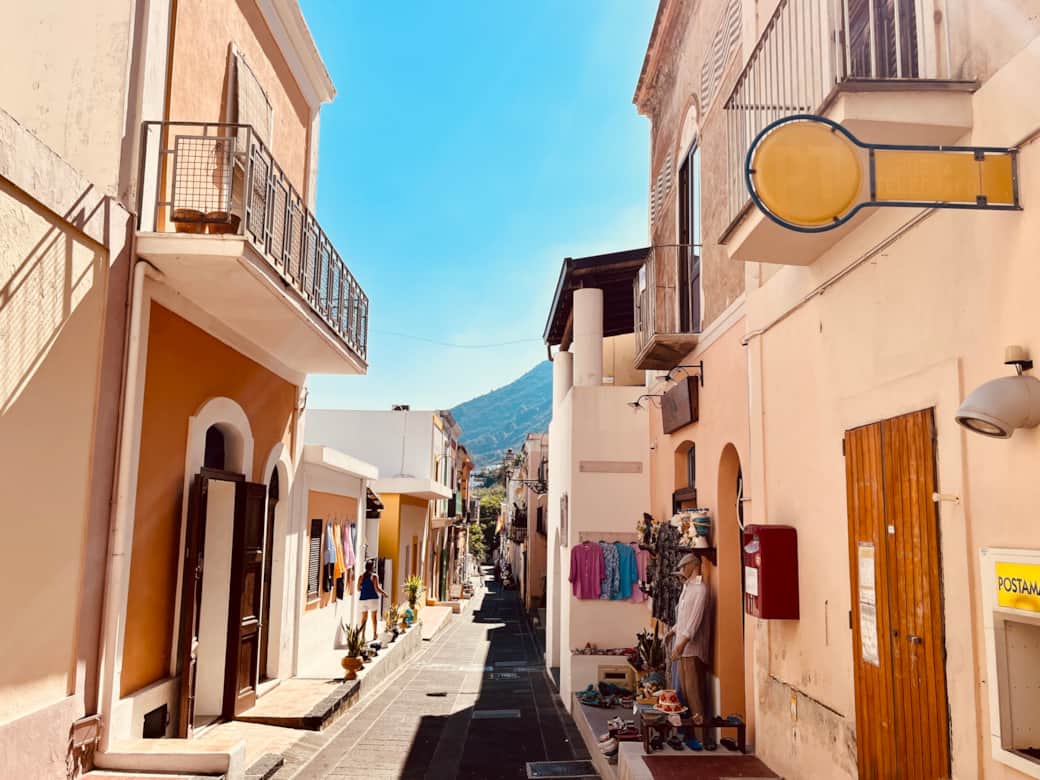
Perhaps the true jewel of the entire archipelago, with its endless green landscapes and the peace that emanates from every stone, Salina represents a unique place in many respects.
In ancient times it was known by the Greeks as Didyme (“twin”), due to the two main peaks that characterize it and recall the volcanic origin of this small piece of land in the middle of the sea. It takes its current name from the small coastal lake in the village of Lingua, once used as a salt pan. It is the second largest island after Lipari, with its 27 square kilometers, yet it has also maintained a central role in the transport routes to and from the archipelago.
More than half of its territory is covered by a Nature Reserve, which can be explored through naturalistic trails and excursions leading into the very heart of the island. With over 400 plant species, some of them endemic, it can offer emotions even to eyes well accustomed to extraordinary natural beauty.
Its uniqueness is not only natural but also administrative. Salina is in fact the only island in the Aeolian archipelago that does not fall under the jurisdiction of the Municipality of Lipari. Three separate municipalities coexist within such a small space: Santa Marina Salina, Malfa, and Leni.
Santa Marina Salina
The municipality of Santa Marina Salina (the largest and most populated of the three) lies at the foot of Fossa delle Felci, where it is possible to admire an ancient crater now covered in vegetation.
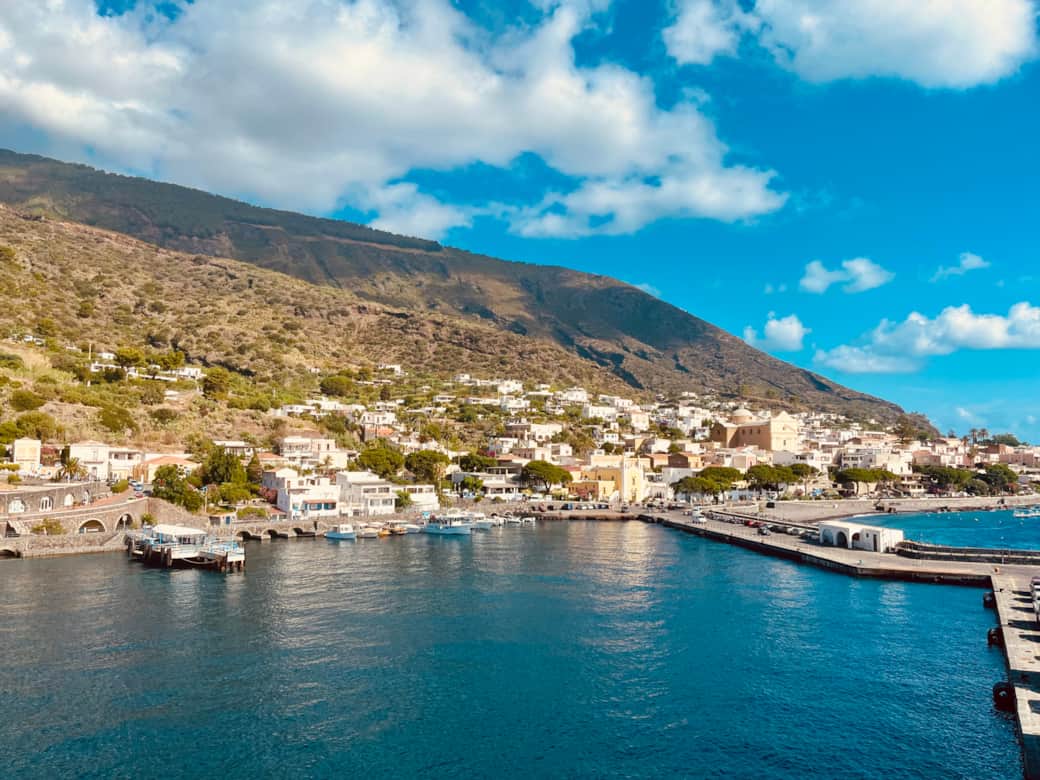
Upon arrival, welcomed by the small, neatly organized harbor, your attention is immediately drawn to the large 18th-century church with its prominent bell towers, which forms the backdrop of the main village square. This area is in fact the most lively part of the island, full of shops and venues both along the seafront and on the parallel main street. In the evenings, especially during the summer season, it becomes a bustling meeting point that attracts the island’s nightlife.
Lingua village and its lighthouse
A few kilometers away, you will find the village of Lingua, a small rustic fishing hamlet that hosts the natural lake from which the island takes its name. It is one of the most enchanting places on the island and, especially in summer, it becomes pleasantly busy with tourists lining up to taste the famous “Pane Cunzato” by Alfredo (a must-try).
This small, romantic village offers only a few hotels and holiday homes, a handful of trattorias, and its own small beach. Here, whitewashed houses meet the colors of the sky, along with tomatoes and aromatic herbs traditionally left outside to dry.
From Lingua, a small path also leads up toward Mount Fossa delle Felci.
All around, cultivated fields take center stage: wheat and barley in the lower areas, and olive groves alternating with vineyards as the landscape rises.
A magical place rich in history, such as the old lighthouse, built in 1953 and restored in 2011 to host the Museum of the Sea and Salt. Inside its rooms, you will find historical documents about the village of Lingua, photographs from the past, and rotating temporary exhibitions.
Wine Museum
The tradition of vine cultivation, along with passion, culture, and history, is celebrated in this small Wine Museum.
It is located just behind the municipality of Santa Marina Salina and represents the evolutionary history of grape cultivation and winemaking techniques since ancient times.
Inside, materials and tools are displayed that illustrate this evolution, including the use of the palmento, a stone basin used for must fermentation.
An archaeological section includes findings of ancient tools and materials used in these processes.
Malfa
Malfa is a small town located along the north-eastern coast of the island, characterized by a calm and reserved atmosphere. It owes its name to the earliest settlements, mainly originating from Amalfi. Here, tranquility is the defining feature across restaurants, venues, shops, and of course the beautiful hotels that line the main road and the inner streets.
Over the years, Malfa has managed to renew its offer thanks to the initiatives of some hoteliers and restaurateurs who have skillfully used not only the surrounding nature and landscape but have also reinterpreted Aeolian traditions and culture in a contemporary way. This is evident both in the typical features of local cuisine and in the stylistic elements of the island’s architecture.
In Malfa you will also find a charming museum dedicated to Aeolian Emigration.
Pollara
Pollara is a place of true “pilgrimage” for many, as it was the filming location of the Oscar-winning movie Il Postino by Michael Radford, starring Philippe Noiret and Massimo Troisi. For Troisi, it was his last film before his untimely passing.
It is a small village built within the depression created by the crater of an ancient volcano. It is likely one of the most evocative and romantic places on the entire island of Salina.
The beach in the cove is made of dark sand (a unique feature for this island), and the white cliffs rising steeply above the sea provide a striking backdrop, together with the typical Mediterranean scrub vegetation.
The village is mainly built around the Church of Sant’Onofrio, constructed in 1853, which still preserves its original flooring along with statues and paintings. From here, you can enjoy a truly exceptional view, especially at sunset—ideally from the sea. At this time of day, the sun sets behind the silhouettes of Alicudi and Filicudi on the horizon, and everything becomes simply magical.
Capo Faro
Capo Faro è una piccola frazione del comune di Malfa ed è un piccolo gioiello incastonato nei vigneti di Malvasia meticolosamente curati.
La zona è impreziosita dal sito preistorico di Portella, risalente all’età del bronzo, che può essere visitato. Anche la picccola Chiesetta di Sant’Anna merita menzione. Risale infatti al 1700 e al suo interno si possono vedere numerose sculture e raffinati dipinti.
Infine, per gli amanti del vino, della buona cucina e del relax, la Tenuta Capofaro offre molteplici soluzioni e pacchetti per poter trascorrere del tempo immersi nella natura accompagnando il tutto con speciali degustazioni di vini.
Vale la pena di fare una sosta qui anche solo per un aperitivo e avere così l’opportunità di ammirare la notevole cura e meticolosità che caratterizzano la tenuta.