
Vulcano
From a very young age, I have always seen Vulcano as the wildest of the seven islands—perhaps even more than Stromboli itself, which says a lot.
I believe this impression comes from the scents (or rather, the smells) that hit you as soon as you step off the boat and immediately make things clear: this is a real volcano, and it means business.
Everything begins with Greek mythology, which describes this island as Hephaestus’ personal workshop. Today, the volcano is still active and is constantly monitored in its geophysical activity by the Lipari station.
Climbing the crater is an extraordinary and unforgettable experience. You find yourself immersed in rocks and soil that change color as you ascend toward the summit, surrounded by clouds of vapor rising from the fumaroles.
At times, it feels like being on a lunar landscape.
The island is composed of three (or four) main settlements: Porto, Piano, Gelso, and Vulcanello. The latter is connected to the main island by a small isthmus and can be reached on foot from the port.
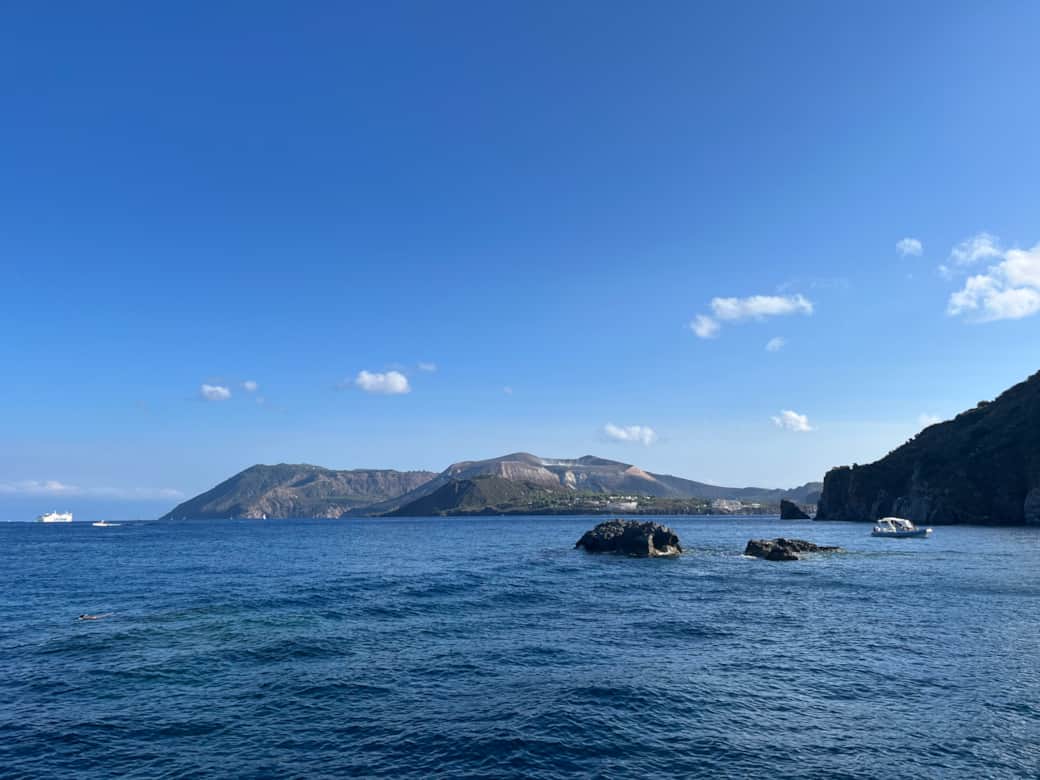
Climbing the Crater
The volcano, known since antiquity as attested by the writings of Thucydides, last erupted between 1888 and 1890. Since then, fumarolic activity has continued to be recorded, along with the island’s typical micro-seismic activity.
It is possible to hike to the summit via a trail that begins along the road connecting the village of Porto Levante to Vulcano Piano. The walk is approximately 3 km in total.
The path winds along the side of the volcano, offering panoramic photography opportunities at every altitude. From the summit, the view is simply incredible: all the islands lie before you, their shapes clearly visible and easy to distinguish. The ascent to 386 meters above sea level is not technically difficult, but it does require a basic level of fitness and endurance. You walk across red earth, accompanied throughout by the smell of sulfur.
Once at the top, you can optionally walk around the crater rim (about 500 meters in diameter) and observe its interior from privileged viewpoints.
In recent years, volcanic activity has intensified (starting in 2021), raising concerns from the Civil Protection, which has increased the alert level to yellow and restricted access during certain hours of the day (typically from late morning to mid/late afternoon, ascent is not permitted).
The climb is not recommended for those with physical difficulties or sensitivities to gas exposure. The presence of gases should, in any case, be taken seriously by all visitors, who are advised to keep as far away from them as possible.
Vulcanello
At first glance, it looks like a small island within the island. Vulcanello is a small, now extinct volcano, about 120 meters high, formed starting in 183 BC, with eruptions that continued until the 16th century.
The visit from Vulcano Porto is relatively easy, and its main “attraction” is the curious Valley of the Monsters on the northern side. This area is characterized by a series of pinnacles of varying shapes, which—under the play of shadows cast after a certain time of day—evoke the image of beasts and fierce creatures.
From here as well, the view is memorable and will undoubtedly inspire you to capture striking photographs.
Punta dell'Asino Beach
This beach is perhaps the closest thing to a tropical paradise you will find in the islands. Lively both day and night, thanks to the frequent parties that are organized here, it is a place rich in a wide range of colors—from the blue of the sea contrasting with the black sand, to the green of the surrounding vegetation.
It is also one of the few equipped beaches on the island, allowing visitors to spend a relaxing day enjoying the sun and the sea. It can be easily reached either by sea or by land via a steep road that leads directly to the beach. A small restaurant offers traditional local dishes.
Thermal baths
A natural tourist attraction, the Vulcano Thermal Baths pay tribute to the characteristic sulphur mud pools produced by the volcano’s immense geothermal energy.
The mud is highly valued for making the skin smoother and is believed to help with joint problems and relieve respiratory conditions. Some springs flow directly along the seashore, making bathing in these areas pleasant even during the winter season.
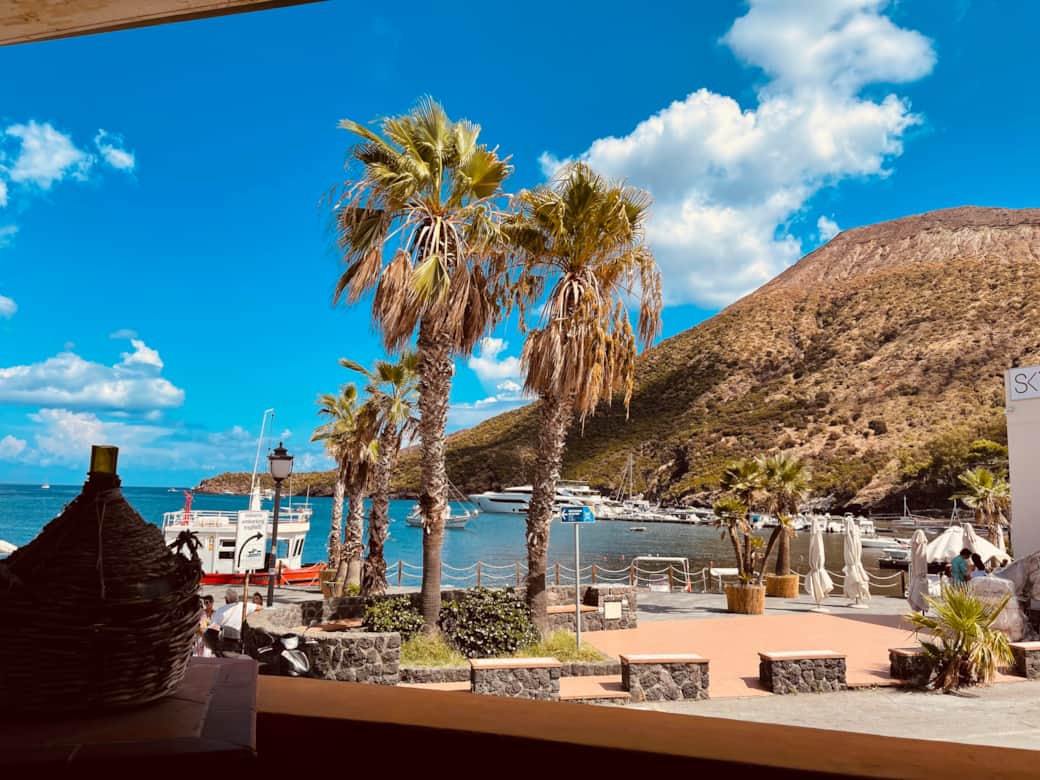
Vulcano Gelso
Do you remember the Latin texts in which mention was made of the locus amoenus? In my personal view, Vulcano Gelso has always been the very embodiment of a locus amoenus.
It can hardly even be defined as a hamlet, or a village. Not even a “cluster” of houses truly describes Vulcano Gelso. Yes, there are houses, but they are not clustered together; rather, they are scattered along the southern coast of the island, facing Sicily. The only thing they truly share is this: they all overlook the same stretch of coastline.
Here, my childhood memories fade in, with boat trips taken together with my family. Even today, this place is still able to evoke emotions, thanks to the walk leading to the large lighthouse and the small church dedicated to the Madonna delle Grazie. A tiny chapel where, in the past, the priest would only occasionally arrive—strictly on the back of a humble mule from the village of Vulcano Porto. This is what my father still recalls from the immediate post-war period.
Visiting these places, beyond the endless beauty of the sea, truly allows one to step back into the past and imagine life on these islands in ancient times, far removed from the frenzy of the modern, civilized world.
Ancient Royal road
Among locals, it is known as the “old road,” a charming nickname referring to the ancient route completed during the Bourbon period. A remarkable attraction for hiking and trekking enthusiasts, it allows visitors to observe the island in all its splendor.
The road begins in Vulcano Porto and connects the villages of Piano and Gelso, following what was once a path carved by lava, featuring stunning gorges and rocky walls.
Spiagge Nere
One of the island’s main attractions, this beach is known for its distinctive black sands. It is the most famous beach on the island and also the most suitable for children, thanks to the presence of fine sand instead of the typical stones and pebbles found on the islands.
It is essentially a bay, and therefore the effect of open-sea waves is softened by the shallow waters, allowing even the youngest visitors to swim safely and comfortably.